


Johns Hopkins Aramco Healthcare patient walks again after ‘miracle’ knee surgery using 3D technology
The orthopedic surgical team at Johns Hopkins Aramco Healthcare conducted the hospital’s first total knee replacement using 3D technology.
An elderly patient at Johns Hopkins Aramco Healthcare who underwent a novel knee replacement procedure was able to walk up and down stairs pain free the morning after surgery.
For the first time, surgeons at Johns Hopkins Aramco Healthcare used 3D scanning and modeling technology to conduct a more precise total knee replacement that drastically cut the patient’s recovery time.
“We finished surgery at 3 p.m. and by 9 a.m. the next day, the patient was walking up and down stairs completely unassisted and without pain,” Dr. Mojieb Manzary, Chief of Orthopedics at Johns Hopkins Aramco Healthcare and the lead surgeon, said. “I have never seen anything like it before — it was a miracle.”
After undergoing a traditional total knee replacement, a patient will typically need a day or two before they can begin to walk again, with considerable assistance from the physical therapy team. It is also likely that they will need crutches or a walker for a few days after being discharged.
With 3D total knee replacement at Johns Hopkins Aramco Healthcare, the orthopedics team aims for the patient to walk unassisted on the same day as surgery, or the morning after surgery. If all is well after their second unassisted walk, the patient can go home. This means they stay in hospital for considerably less time, take less pain medication, and regain the full function of their knee much faster than traditional surgery.
The new procedure begins with a CT scan of the patient’s knee to create a detailed 3D image of the joint. This image is then sent to a specialist manufacturer who creates a physical 3D model of the joint.
 With input from the Johns Hopkins Aramco Healthcare orthopedics team, the manufacturer then uses the model to create bespoke, precision-made cutting blocks for the patient’s thigh and shin bones. During surgery, these cutting blocks guide the surgeon’s blade to the perfect cutting location on each bone, helping them to make precise cuts at the correct angles, which ensures the patient’s knee implants fit snugly.
The key advantage of using bespoke cutting blocks for a total knee replacement is that the surgeon does not need to drill guide rods into the patient’s thigh and shin bones — which can be a considerable source of pain during recovery.
Dr. Manzary adds: “Without 3D modeling, a surgeon will typically be more conservative about their initial cuts and remove a little less bone. They may then need to go in and revise or repeat the cut.
“With 3D modeling, you only need to make one cut. The cutting blocks have an intimate fit with the patient’s knee, and they guide the blade to the perfect position. This single cut is much more accurate — picture perfect, even. You get a fine cut with no irregularity. It is the perfect way to correct the knee.”
Learn more about joint replacement at Johns Hopkins Aramco Healthcare.
More News
All News
07 Jul, 2026
Two Births in One Day
A rare complication stopped Hasna's heart moments after her daughter was born. The Johns Hopkins Aramco Healthcare team that brought her back gave her family a second birth: her own.
05 Jul, 2026
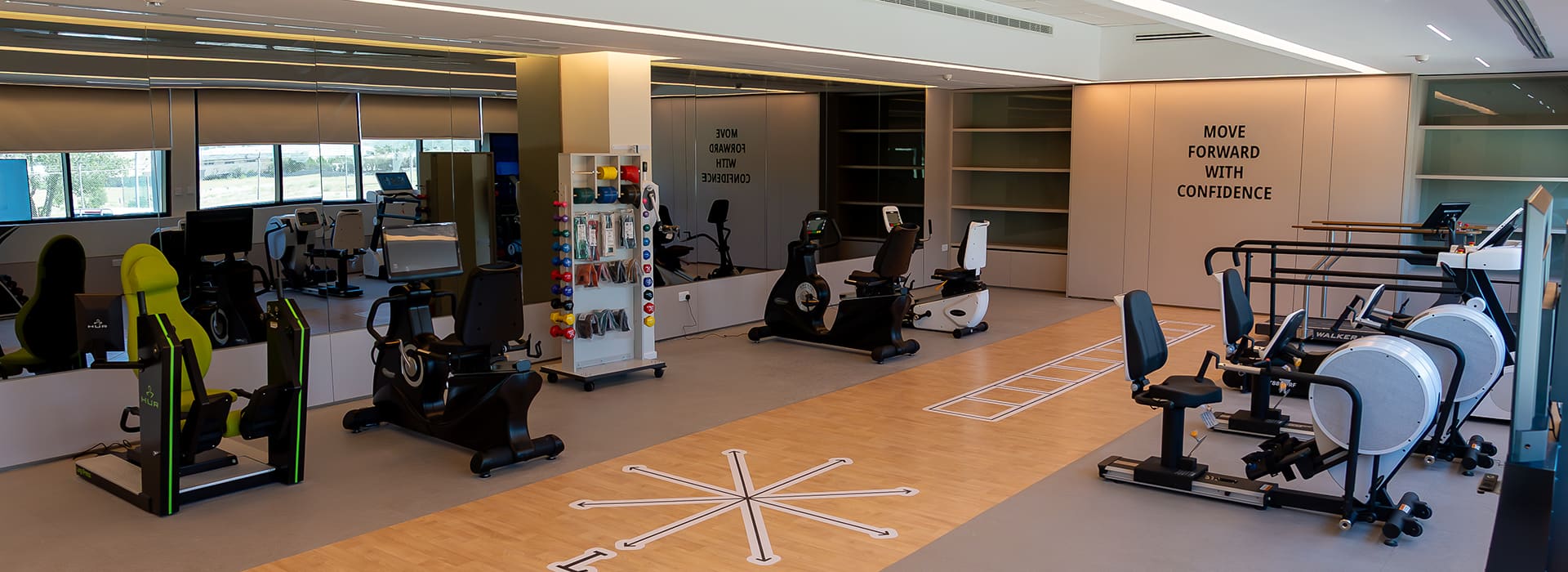
Johns Hopkins Aramco Healthcare Expands Access to Specialized Therapy with New Rehabilitation Center
The new Rehabilitation Center features advanced technologies that improve privacy, capacity and patient recovery.

30 Jun, 2026
Global Top 3% Ranking for KLAS Pinnacle Award
Johns Hopkins Aramco Healthcare earned a top 3 % global ranking in clinician EHR experience, reflecting strong satisfaction and excellence.